Coinomi wallet: Features, Security, and Asset Support
Coinomi wallet Is a Multi-Asset Crypto Wallet for Everyday Self-Custody
Coinomi wallet Is a non-custodial cryptocurrency wallet used to store, send, receive, and exchange digital assets from one app. It is best understood as a self-custody wallet: users control the recovery phrase and private keys, while the app provides an interface for managing coins and tokens. Coinomi wallet may suit people who want broad asset support, mobile access, and built-in transaction tools, but every user should verify current features, fees, and supported networks with official sources before relying on it.
Coinomi wallet sits in a category that includes mobile wallets, desktop wallets, and multi-chain self-custody tools. The main idea is simple: the wallet helps you interact with blockchains without handing custody of your funds to an exchange account. That convenience comes with responsibility. If the backup phrase is lost, exposed, or stored carelessly, the app cannot simply reset ownership in the way a bank or email service might.
What is Coinomi wallet?
Coinomi wallet is a crypto wallet application associated with long-running multi-asset support and a self-custody model. It has been known in the market since the earlier years of consumer cryptocurrency adoption, when users often needed separate wallets for Bitcoin, Litecoin, Dogecoin, Ethereum, and other networks. Coinomi wallet aims to reduce that friction by putting many assets in one place.
Coinomi wallet is not the same thing as a centralized exchange. With an exchange, the platform may hold assets on your behalf and provide account recovery through identity checks or customer support. With a non-custodial wallet, the recovery phrase is the critical credential. Coinomi wallet can display balances and build transactions, but the user’s backup is what ultimately protects access to funds.
For readers comparing wallet categories, it helps to separate the app interface from the blockchain itself. Coinomi wallet does not make Bitcoin or Ethereum transactions reversible. It also does not remove network fees, market volatility, phishing risk, or the need to check addresses. The wallet is a tool for self-custody, not a guarantee that every crypto decision is safe or profitable.
How does Coinomi wallet work?
Coinomi wallet works by generating and managing wallet keys locally for the user, then using those keys to sign transactions. In plain terms, the app creates the credentials that prove you can move a coin or token. When you send crypto, Coinomi wallet prepares the transaction details, asks for confirmation, signs the transaction, and broadcasts it to the relevant network.
Coinomi wallet typically relies on a recovery phrase during setup. That phrase is a human-readable backup that can restore access to supported assets if the phone or computer is lost. Because the phrase can unlock funds, it should be written down carefully and kept offline. Screenshots, cloud notes, email drafts, and chat messages are risky storage places because they can be searched, synced, stolen, or exposed.
The protocol rules still come from each blockchain. Bitcoin transactions follow Bitcoin fee markets and confirmation times. Ethereum and EVM-compatible assets depend on gas fees and contract interactions. Token transfers can fail if the wrong network is used. Coinomi wallet gives users a single interface, but each asset still has its own mechanics, limits, and risks.
What can you use Coinomi wallet for?
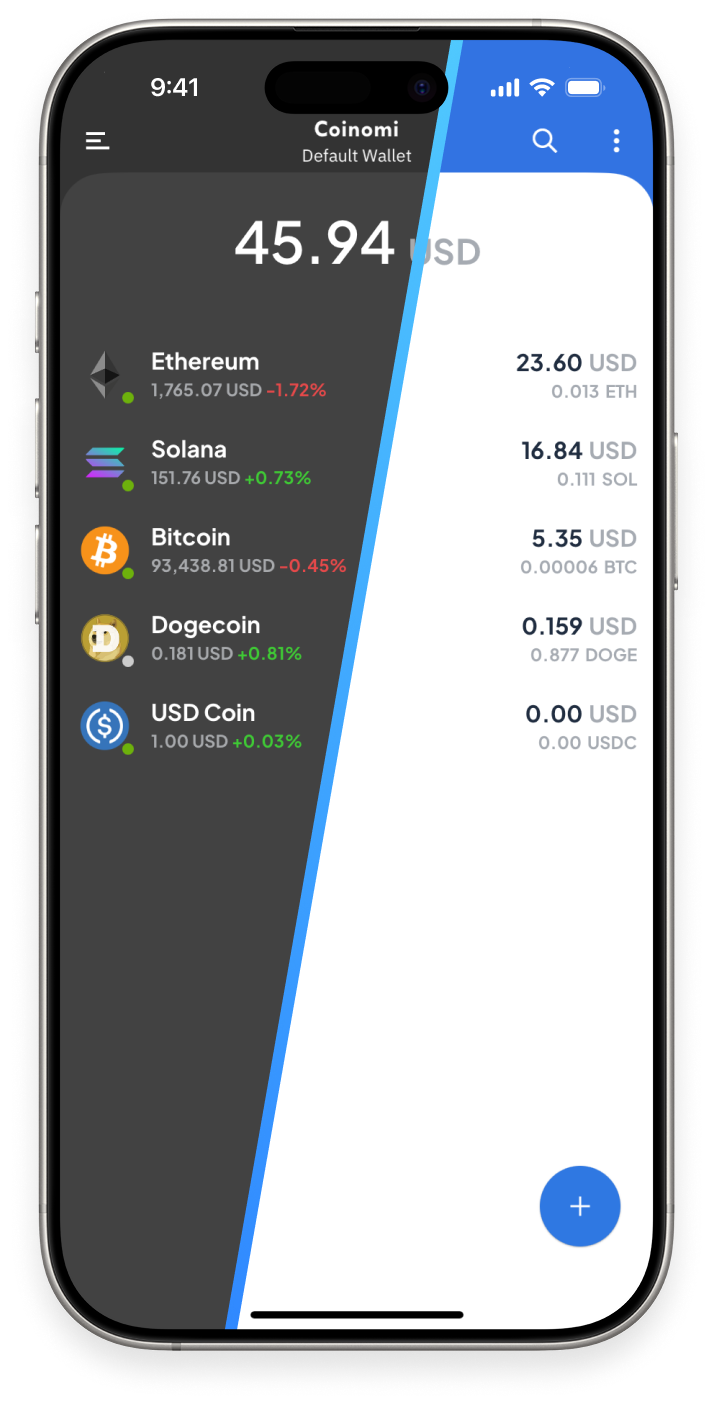
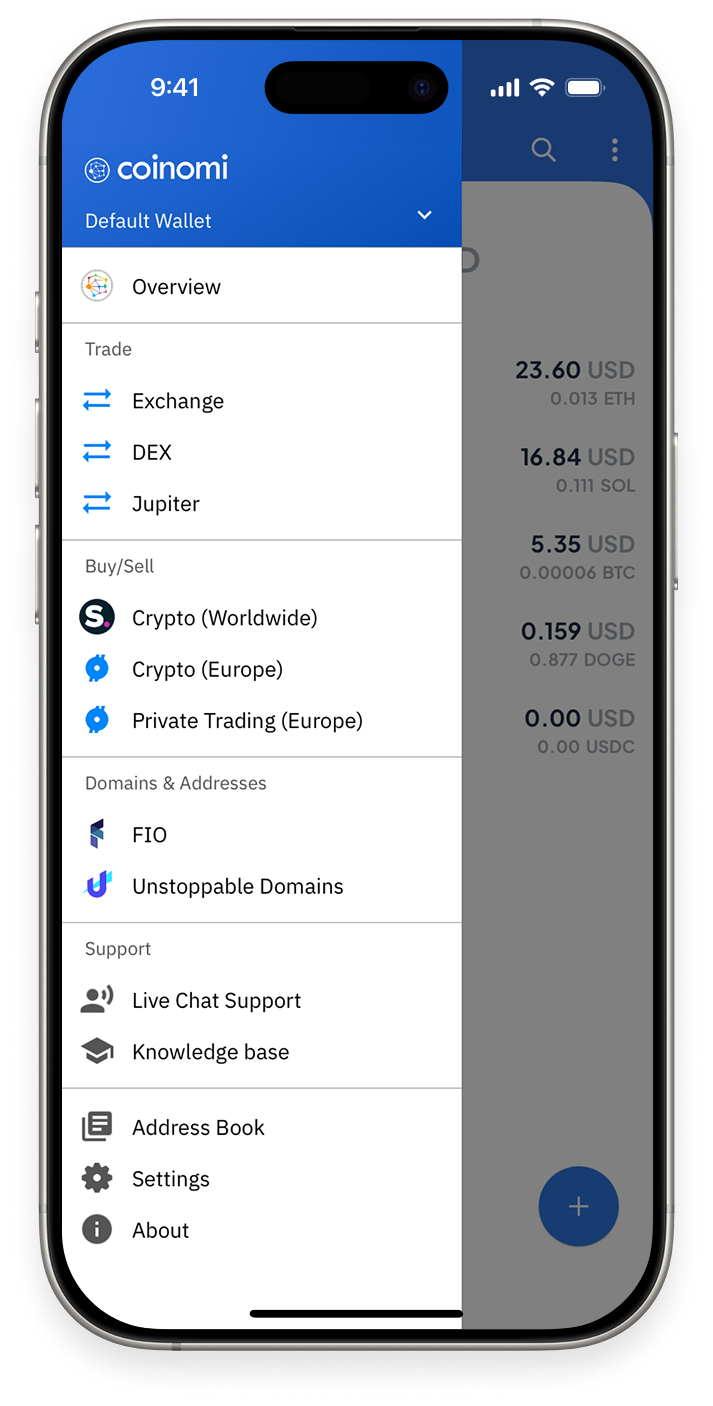
Coinomi wallet is commonly considered for everyday wallet tasks: holding crypto, receiving payments, sending funds, monitoring balances, and using in-app exchange or swap features where available. A user might keep a small operational balance in Coinomi wallet for transfers while storing larger long-term holdings in a hardware wallet or another cold-storage setup.
Coinomi wallet can also be useful for people who hold several different assets and do not want to install a separate wallet for each chain. Broad asset coverage is one of the reasons multi-asset wallets remain popular. Even so, support should never be assumed. Before depositing funds, users should confirm that Coinomi wallet supports the exact coin, token standard, contract, and network they intend to use.
For a new user, the most practical use case is learning how self-custody works with a small amount. Coinomi wallet can help demonstrate addresses, fees, confirmations, and backups in a real environment. That learning process should happen cautiously. Sending a small test transaction before moving a meaningful balance is still one of the simplest ways to avoid costly address or network mistakes.
How to get started with Coinomi wallet
Coinomi wallet setup should be approached slowly because the first few minutes create the foundation for future security. The exact screens may change over time, so users should follow the current app instructions and verify downloads from official sources. Avoid app links from ads, unsolicited messages, fake support accounts, or search results that look suspicious.
Download Coinomi wallet only from an official source or a verified app store listing.
Create a new wallet and write the recovery phrase on paper or another offline medium.
Confirm the phrase privately and never share it with support staff, friends, or websites.
Add the assets and networks you actually plan to use.
Send a small test transaction before transferring a larger amount.
Review fees, addresses, and network names before every confirmation.
Coinomi wallet users should also consider device hygiene. A phone with malware, a browser filled with suspicious extensions, or a desktop used for risky downloads can undermine even a well-designed wallet. Strong device passcodes, operating system updates, and careful app permissions matter. Coinomi wallet security is partly about the software, but it is also about the environment around it.
Is Coinomi wallet safe?
Coinomi wallet can be used safely only when the user treats self-custody seriously. The wallet model gives control to the holder of the recovery phrase, which is powerful but unforgiving. A legitimate wallet app cannot protect a user who types the seed phrase into a fake website, sends funds to an attacker’s address, or approves a malicious transaction without understanding it.
Coinomi wallet safety should be evaluated in layers. First, confirm that the app source is authentic. Second, protect the recovery phrase offline. Third, use a secure device. Fourth, check transaction details before sending. Fifth, keep only an amount in a hot wallet that matches your risk tolerance. Hot wallets are convenient because they are connected to everyday devices, but that connection also increases exposure.
There is no wallet that removes all crypto risk. Coinomi wallet may provide features that make asset management easier, but users still face price volatility, irreversible transfers, smart contract risks, network congestion, and phishing. This page is educational content, not financial advice. Anyone making decisions about crypto assets should verify details independently and consider whether they understand the downside before using any wallet.
Fees and costs of Coinomi wallet
Coinomi wallet users should distinguish between wallet costs and blockchain costs. A wallet interface may be free to download, while the network still charges transaction fees. Bitcoin miner fees, Ethereum gas, and fees on other chains can change quickly based on demand. Coinomi wallet may show fee options, but the final cost depends on the selected network and transaction conditions.
Coinomi wallet may also connect users with swap or exchange services inside the app. Those services can involve spreads, partner fees, minimum amounts, routing limits, or price movement between quote and execution. Before using an in-app exchange feature, compare the quoted amount, network fee, destination asset, and expected confirmation time. A convenient swap is not automatically the cheapest or lowest-risk route.
Cost type
What it means
What to check
Network fee
Paid to blockchain validators or miners
Fee level, speed, and current congestion
Swap spread
Difference between market price and quoted price
Final received amount before approving
Token requirement
Some networks require a native coin for gas
Whether you have enough gas asset to send
In practice, Coinomi wallet is easiest to use when the user understands the fee asset for each chain. For example, a token on an Ethereum-style network may require the chain’s native gas token to move. A balance can appear spendable while still being stuck until the right fee asset is available.
Coinomi wallet benefits and tradeoffs
Coinomi wallet offers the main benefits people expect from a multi-asset crypto wallet: convenience, self-custody, broad asset management, and a familiar app interface. Managing several coins from one place can reduce operational clutter. The ability to receive, send, and monitor many assets without logging into a custodial exchange is appealing to users who value direct control.
Coinomi wallet also has tradeoffs. Multi-asset support can make the interface more complex, especially for people who do not yet understand network names, wrapped tokens, contract addresses, or address formats. A wallet that supports many assets still requires careful verification. The wrong network or lookalike token can cause confusion, delays, or loss.
Coinomi wallet may be more convenient than a hardware wallet for frequent transfers, but that convenience comes from being available on an internet-connected device. For larger balances, many experienced users separate spending funds from long-term holdings. A hot wallet can be useful for activity, while deeper storage may deserve additional controls, offline backups, or hardware signing.
How does Coinomi wallet compare with alternatives?
Coinomi wallet belongs to the same broad family as other non-custodial wallet apps, but users should compare wallets by their actual needs instead of reputation alone. A Bitcoin-only user may prefer a wallet focused on Bitcoin features. A DeFi user may need deep browser extension support, hardware wallet pairing, and clear transaction simulation. A multi-coin holder may care most about asset coverage and mobile access.
Coinomi wallet can be compared across several practical dimensions: supported assets, operating systems, backup flow, privacy settings, swap availability, customer support channels, and transparency about current development. The best wallet for one person may be the wrong wallet for another. A trader, long-term holder, NFT user, and small business receiver may each need different tooling.
For broader research, readers can compare this page with our and our . Those topics matter because the most important decision is not only which wallet to install. It is also how the user stores backups, verifies transactions, and separates everyday activity from long-term savings.
Common mistakes to avoid with Coinomi wallet
Coinomi wallet users often face the same mistakes seen across the crypto industry. The most damaging errors are usually simple: downloading a fake app, losing the recovery phrase, sharing the phrase with a scammer, sending to the wrong network, or skipping a test transaction. These are preventable habits, but they require attention before something goes wrong.
Coinomi wallet should never be treated like a password manager with a reset button. If the recovery phrase is gone and no working device remains, funds may be unrecoverable. If the phrase is exposed, someone else may be able to restore the wallet and move assets. A strong app password can protect local access, but it is not a replacement for secure phrase storage.
Another mistake is assuming every token with a familiar ticker is legitimate. Coinomi wallet may display assets based on networks and token data, but users should verify contract addresses and official asset information before interacting with unfamiliar tokens. Scammers often exploit name similarity, urgent messages, and fake airdrops. Treat unexpected funds, reward claims, and support requests with caution.
Who should consider Coinomi wallet?
Coinomi wallet may fit users who want a non-custodial wallet with broad crypto asset support and a straightforward way to manage multiple balances. It may be especially relevant for people who understand the basics of seed phrases, fees, and irreversible transactions. Beginners can still use Coinomi wallet, but they should start with small amounts and learn the workflow before storing meaningful value.
Coinomi wallet may not be ideal for users who want custodial recovery, regulated account support, or a simple account login backed by a company’s help desk. It also may not satisfy advanced users who need specialized DeFi tooling, detailed transaction simulation, or institutional controls. The right choice depends on asset mix, security expectations, and how often funds will move.
Coinomi wallet is best approached as one possible tool in a broader crypto security setup. Verify the current official app, confirm supported assets, understand fees, protect the recovery phrase, and test before sending more than you can afford to lose. With those habits, Coinomi wallet can be evaluated realistically: useful for self-custody and multi-asset access, but still subject to the same serious risks that come with cryptocurrency ownership.
Reader rating:
4.3 / 5
based on 328 ratings
Questions and Answers
What is Coinomi wallet used for?
Coinomi wallet is used to store, send, receive, and manage cryptocurrency from a non-custodial wallet app. It is commonly considered by users who want access to multiple assets in one interface instead of maintaining separate wallets for every coin. Because it is a self-custody wallet, users must protect their recovery phrase and verify network details before sending funds.
Is Coinomi wallet a custodial or non-custodial wallet?
Coinomi wallet is generally understood as a non-custodial wallet, meaning the user controls the recovery phrase and private keys rather than relying on a centralized exchange account. This gives the user direct control over funds, but it also removes many familiar account recovery options. If the recovery phrase is lost or exposed, access to crypto assets can be lost or stolen.
Does Coinomi wallet support Bitcoin and Ethereum?
Coinomi wallet has been associated with support for major assets such as Bitcoin and Ethereum, along with many other blockchain assets. However, supported coins, tokens, and networks can change over time. Before depositing funds, users should check official Coinomi wallet sources inside the current app or official documentation to confirm the exact asset, token standard, and network.
What fees does Coinomi wallet charge?
Coinomi wallet users should expect blockchain network fees when sending crypto, such as Bitcoin miner fees or Ethereum gas fees. If using built-in swap or exchange features, there may also be spreads, partner fees, minimum amounts, or routing costs. The safest habit is to review the final send amount, received amount, network fee, and asset network before approving any transaction.
How do I keep Coinomi wallet secure?
To keep Coinomi wallet secure, download it only from official sources, write the recovery phrase offline, never share the phrase, protect the device with updates and a strong passcode, and verify addresses before sending. Avoid screenshots or cloud storage for seed phrases. For larger balances, consider separating everyday wallet funds from long-term holdings stored with stronger security controls.
Can Coinomi wallet recover lost funds?
Coinomi wallet cannot usually reverse blockchain transactions or recover funds sent to the wrong address, wrong network, or a scammer. Cryptocurrency transfers are generally final once confirmed by the network. Recovery depends on the specific situation and whether the user still controls the destination. This is why test transactions, address checks, and official-source verification are important before sending meaningful amounts.
LinkedIn and 3rd parties use essential and non-essential cookies to provide, secure, analyze and improve our Services, and to show you relevant ads (including
professional and job ads
) on and off LinkedIn. Learn more in our
Cookie Policy
.
Select Accept to consent or Reject to decline non-essential cookies for this use. You can update your choices at any time in your
settings
.
Bitcoin Pizza Day isn't just about the price. 🍕
It proved for the first time that $BTC had real-world value. Without that pizza order, we might not be here today.
Happy Bitcoin Pizza Day. 🧡
Last week's $LDO airdrop on $ETH is out, go check your wallet! 💸
New tasks are live this week in Coinomi Rewards. Stack those crystals and secure your spot in the next drop. 💎
➡
https://lnkd.in/dbckK6yT
💬 Let’s build this together.
Your feedback matters. If there’s anything you’d love to improve, fix, or add in Coinomi, let us know.
We read everything and use it to shape what’s next 👇
🍎 Apple:
https://lnkd.in/d5njy4dH
👽 Google Play:
https://lnkd.in/de4RMvFw
Your weekly crypto recap is here:
📃 Clarity Act moving.
🟠 Bitcoin at $82K. Trump family buying the dip.
🟢
#Tether
freezing millions.
🟣
#Kraken
reshuffling its infrastructure.
What's the story that surprised you most this week? 👇
New week. New tasks. New chances to earn. 💎
Head to Coinomi Rewards, complete your tasks and stack those crystals, your spot in this week's airdrop won't secure itself.
👇
https://lnkd.in/dbckK6yT
We're partnering with
Quickex
, a non-custodial instant crypto exchange trusted since 2018 🤝
✅ Great rates, with high limits
✅ No stored funds.
✅ No account needed.
Swap $USDT, $LTC, $BTC, $SOL, $TRX and more, right inside your Coinomi
https://lnkd.in/djkyFa5A
💸 Last week's $USDC airdrop on
#Base
is out, go check your wallet!
Don't forget to check in daily, complete your tasks, and stack those crystals.
Next week's airdrop?
#LidoFinance
$LDO 😏
https://lnkd.in/dbckK6yT
April's most traded pairs on Coinomi are in. 👀
$BTC dominating every direction, and $XMR sneaking into the top 5. The privacy community never sleeps. 🔒
What are you swapping?
Happy Birthday, Coinomi 🎂🎉
We started in 2014 with one mission, put users in control of their own crypto.
12 years later, nothing has changed. 🧡 Your keys, your coins, always.
Thank you for being part of this.
And stay tuned, next week we have something big 👀