Coinomi: Crypto Wallet Overview, Assets and App Features
Coinomi Is a Crypto Wallet Overview for Users Comparing Features and Risks
Coinomi Is a non-custodial cryptocurrency wallet used to store, send, receive, and exchange many blockchain assets from one app. It is best understood as a multi-asset wallet for people who want control of their own private keys while managing coins such as Bitcoin, Ethereum, Litecoin, Dogecoin, and other supported tokens. Coinomi can be useful, but users should verify current asset support, fees, app availability, and security details through official sources before moving funds.
Coinomi is often searched by people who want a practical answer before installing another crypto app. The main idea is simple: Coinomi gives the user a wallet interface, while the user remains responsible for the recovery phrase, device security, transaction review, and backup habits. That structure is different from leaving funds on a centralized exchange, where account recovery and custody work through the platform. With Coinomi, losing the seed phrase or approving the wrong transaction can have permanent consequences.
Coinomi has been associated with mobile-first crypto storage and broad asset coverage for many years. Readers should treat this page as an independent educational guide, not as a statement from Coinomi or a guarantee about current features. Crypto wallet apps change over time as networks upgrade, tokens migrate, swap providers change policies, and app stores update requirements. Before relying on Coinomi for a specific blockchain asset or transaction type, confirm the latest details inside the app and through the official Coinomi website or support materials.
What is Coinomi?
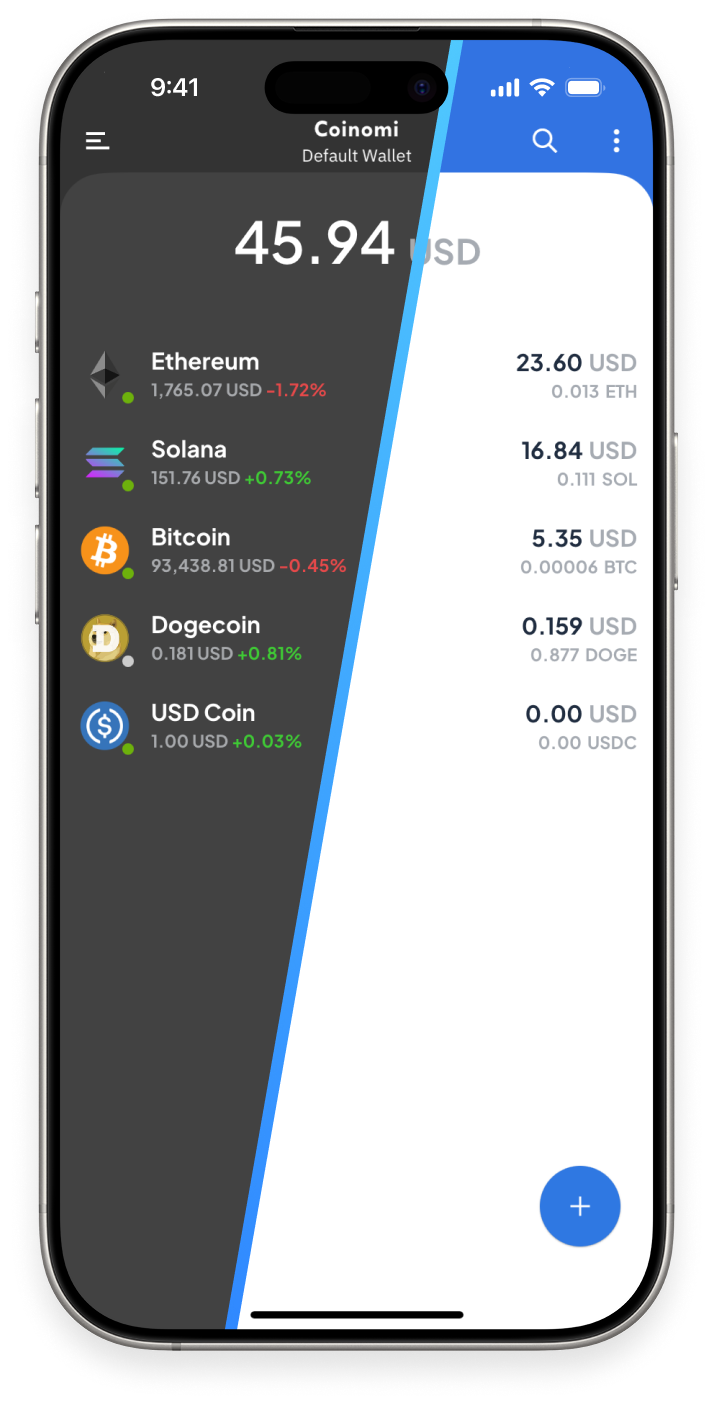
Coinomi is a software cryptocurrency wallet, meaning it stores wallet credentials and lets users interact with blockchain networks through an app rather than through a dedicated hardware device. Coinomi is commonly described as non-custodial because the wallet is designed around user-held private keys. In practical terms, Coinomi helps create or import a wallet, displays balances, produces receiving addresses, prepares outgoing transactions, and connects users to exchange or swap functions when available.
Coinomi is not a bank account, brokerage account, or guaranteed investment product. It is a wallet interface for digital assets that exist on separate blockchains. Bitcoin transactions settle on the Bitcoin network, Ethereum activity settles on Ethereum or compatible networks, and token transfers follow the rules of the relevant smart contract or chain. Coinomi can simplify the experience, but it does not remove network risk, price volatility, user error, or the need to understand which address and network are being used.
Coinomi may appeal to users who want one place to manage several assets instead of maintaining separate wallets for each chain. That convenience is one of the main reasons people compare Coinomi with other mobile wallets, exchange wallets, browser extension wallets, and hardware wallet companion apps. A user choosing Coinomi should weigh convenience against their security model, the value of funds involved, and whether they need advanced decentralized finance features or only basic storage and transfers.
How does Coinomi work for private keys and recovery phrases?
Coinomi works by generating or importing wallet credentials that control blockchain addresses. A recovery phrase, sometimes called a seed phrase or mnemonic backup, is the most important part of the setup. Coinomi can show balances and transaction history, but the recovery phrase is what allows a compatible wallet to restore access. Anyone who obtains that phrase may be able to control the funds, so it should be written down carefully and stored offline.
Coinomi users should understand the difference between the app, the device, and the blockchain. The app is a tool for building and signing transactions. The phone or computer is the local environment where that tool runs. The coins themselves are recorded on public networks, not physically inside the app. If Coinomi is deleted, a device breaks, or a phone is replaced, the recovery phrase is what matters most for restoration, assuming the phrase was recorded accurately and the asset remains supported.
Coinomi may also support wallet-level security features such as passwords, encryption, or biometric access depending on device and app version. Those controls help protect local access, but they are not substitutes for proper seed phrase storage. A strong device passcode, updated operating system, and careful app download habits all matter. Users should avoid screenshots of recovery phrases, cloud notes, email drafts, shared drives, and messaging apps for backups because those locations increase exposure.
Which assets and networks can Coinomi support?
Coinomi is known for broad multi-asset support, and public descriptions have historically referenced Bitcoin, Ethereum, Litecoin, Dogecoin, and many more blockchain assets. The exact list can change, so the safest approach is to check current support before depositing. Coinomi may show a coin or token in one version, but token standards, network upgrades, and regional app availability can affect whether a specific transaction path is practical for a particular user.
Coinomi can be useful for users who hold a mixture of major coins, older proof-of-work networks, and tokens that need a single dashboard. However, asset support is not the same as liquidity, low fees, or easy recovery. Ethereum tokens, for example, require the right network and enough native gas to move. Bitcoin and Litecoin use different address formats. Stablecoins may exist on several chains, and sending a token on the wrong network can create a difficult recovery problem.
Coinomi users comparing wallets should look beyond the number of listed assets. They should ask whether the wallet supports the exact network, address type, token contract, backup method, and transaction features they need. For a broader primer on wallet categories, a reader may find helpful before choosing between a mobile wallet, exchange account, desktop wallet, hardware wallet, or browser extension.
How do you get started with Coinomi?
Coinomi setup usually follows a familiar wallet workflow: install the app from an official source, create a new wallet or restore an existing one, write down the recovery phrase, set local access protection, add desired assets, and test with a small transaction. The most important step is the backup. A wallet that is funded before its recovery phrase is safely stored creates avoidable risk.
Coinomi should be approached with a test-first mindset, especially by new users. Before sending meaningful funds, send a small amount to a receiving address, wait for confirmation, and then try a small outgoing transaction. This reveals network fees, confirmation timing, address format, and the feel of the interface without putting the full balance at risk. Users should also confirm that the receiving address is for the correct chain before every transfer.
Coinomi users can think of the first setup as a short operational checklist:
Download Coinomi only from a verified app store or official source.
Write the recovery phrase on paper or another offline medium.
Set a strong wallet password or device access control.
Add only the assets and networks that are actually needed.
Send a small test transaction before transferring larger amounts.
Keep records of transaction IDs for later review.
Coinomi can make daily wallet actions feel straightforward, but the app cannot judge whether a transfer is financially wise or whether a counterparty is trustworthy. That judgment remains with the user. Crypto transactions are generally irreversible once confirmed, and address mistakes are not handled like ordinary payment disputes.
What can Coinomi be used for day to day?
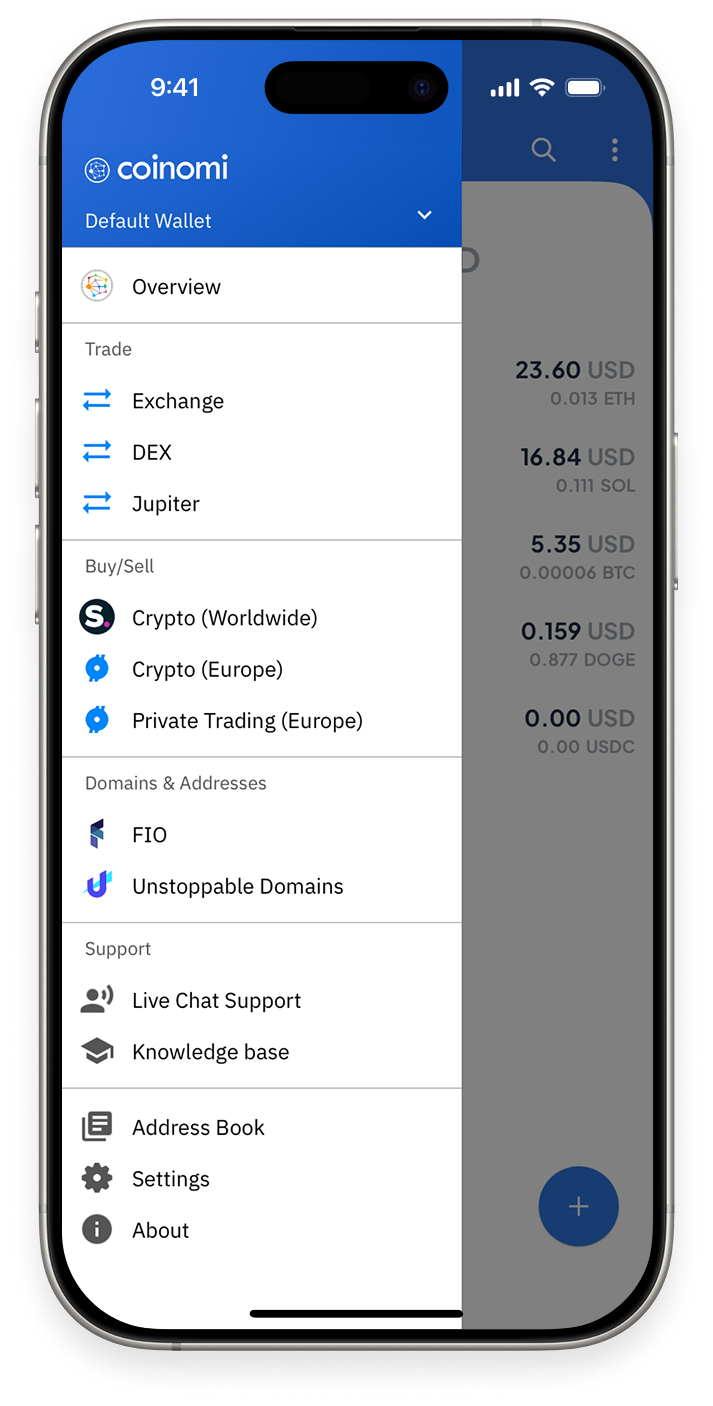
Coinomi is mainly used for storing crypto, receiving payments, sending funds, checking balances, and managing multiple assets from one wallet interface. Some users also use Coinomi for in-app swaps or exchange routes when those services are available. The value of that workflow is convenience: a person can move between Bitcoin, Ethereum-style assets, and other supported networks without installing a separate application for every coin.
Coinomi may be suitable for users who want a general-purpose wallet rather than a narrow DeFi tool. A person who only needs to receive Bitcoin, hold Litecoin, or send Dogecoin occasionally may prefer a simple wallet layout. A user focused on advanced Ethereum DeFi, NFT approvals, lending protocols, or complex on-chain trading may need to compare Coinomi with wallets built more specifically for those ecosystems.
Coinomi also fits a learning role. Because Coinomi presents many assets and networks in one place, it can help users understand how wallet addresses, confirmations, fees, and seed phrase recovery work across blockchains. For anyone still learning basic security, the page on is a useful companion to any Coinomi setup because backup habits matter more than brand preference.
Fees and costs of Coinomi transactions
Coinomi does not control the base economics of public blockchains. When a Coinomi user sends Bitcoin, Ethereum, Litecoin, or another asset, network fees may apply. Those fees compensate miners, validators, or other network participants depending on the chain. Fee levels can change quickly during congestion, and the same transfer can cost very different amounts at different times. Users should review the fee screen carefully before confirming.
Coinomi may also include swap or exchange functions through third-party services. If a user swaps one asset for another inside Coinomi, the effective cost can include spread, service fees, network fees, minimum amounts, and rate movement while the transaction is processing. A displayed rate is not always the same as the final value received, especially in volatile markets. It is sensible to compare the quoted amount with other reputable options before using a swap feature.
Coinomi users should distinguish wallet fees from blockchain fees and provider fees. A wallet can present a transaction, a network can charge gas or miner fees, and a swap partner can price the exchange. These costs are related but not identical. Before moving funds, verify the asset, network, recipient address, fee amount, and expected settlement route. For tax or accounting questions, users should keep their own transaction records and consult qualified guidance where needed.
Is Coinomi safe to use?
Coinomi can be part of a reasonable crypto storage setup when used carefully, but no software wallet should be treated as risk-free. Coinomi runs on internet-connected devices, so its security depends on the app, the operating system, the user's backup method, and the user's ability to avoid phishing. A compromised phone, fake download page, malicious keyboard, copied seed phrase, or social engineering attack can defeat the benefits of a non-custodial wallet.
Coinomi users should verify they are installing the legitimate app and should be skeptical of support messages that ask for a recovery phrase. Real wallet support should not need a seed phrase to answer a question. Coinomi cannot protect funds if a user types the phrase into a fake website or shares it with someone claiming to help. The safest default is to treat every request for a recovery phrase as an attempt to steal funds.
Coinomi may be convenient for moderate everyday use, but larger long-term balances often justify a stronger storage plan. Many experienced users separate small spending balances from long-term holdings and use hardware wallets, multisignature arrangements, or offline backups for higher-value funds. That is not because Coinomi is uniquely unsafe; it is because any hot wallet has exposure to connected-device risk. The right setup depends on amount, frequency of use, and the user's ability to manage backups.
How does Coinomi compare with other crypto wallets?
Coinomi competes in a crowded wallet category that includes exchange wallets, mobile non-custodial wallets, desktop wallets, browser extensions, hardware wallet apps, and chain-specific wallets. Coinomi is strongest when a user values multi-asset convenience and basic wallet functions across many networks. It may be less ideal for users who want deep integration with one blockchain ecosystem, institutional controls, multisig policy management, or hardware-only cold storage.
Coinomi differs from an exchange account because Coinomi is centered on self-custody. With an exchange, the platform may hold funds, manage login recovery, and impose account rules. With Coinomi, the user controls the recovery phrase and signs transactions locally. That can increase personal control, but it also shifts responsibility. If a user loses their backup, sends to the wrong address, or falls for a scam, there may be no central party able to reverse the result.
Coinomi also differs from a hardware wallet because Coinomi is software running on a general-purpose device. Hardware wallets keep signing keys in dedicated devices designed to reduce exposure. For frequent transfers, Coinomi may feel faster. For larger holdings, many users prefer hardware wallets or layered storage. The practical comparison is not about one wallet being best for everyone; it is about matching the wallet to the amount, risk tolerance, and daily workflow.
What should users verify before relying on Coinomi?
Coinomi information should be checked against current official materials because wallet details can change. Before relying on Coinomi, users should confirm the current app version, supported assets, supported networks, backup process, operating system compatibility, swap partners, fee behavior, and any known service notices. This matters especially for tokens, airdrops, chain migrations, and newer networks where support may be limited or dependent on third-party infrastructure.
Coinomi users should also verify their own assumptions. A balance shown in the app may depend on network indexing. A pending transaction may need more confirmations. A swap may involve a partner with its own limits. A token may share a symbol with another asset. A receiving address may look correct but belong to a different network. Careful verification is slower, but it reduces the most common wallet mistakes.
Coinomi can serve as a practical wallet for people who understand self-custody and want multi-asset access in one place. The best use of Coinomi is cautious and deliberate: back up the recovery phrase offline, keep devices clean, test transfers, review fees, avoid unsolicited support, and verify current details before making important moves. Crypto gives users direct control, and that control is valuable only when paired with disciplined security habits.
Reader rating:
4.3 / 5
based on 328 ratings
Questions and Answers
What is Coinomi used for?
Coinomi is used to manage cryptocurrency assets from a software wallet interface. Users can typically create or restore a wallet, view balances, receive funds, send transactions, and use available swap features. It is a non-custodial style wallet, so users are responsible for their recovery phrase and transaction decisions. Current asset support and app features should always be verified through official Coinomi sources before depositing funds.
Is Coinomi a custodial or non-custodial wallet?
Coinomi is generally described as a non-custodial wallet because it is built around user-controlled private keys and recovery phrases. That means the user has more direct control than with a centralized exchange wallet, but also more responsibility. If the recovery phrase is lost or shared with a scammer, access to funds may be lost. Users should store backups offline and never provide the phrase to support contacts or websites.
Which cryptocurrencies does Coinomi support?
Coinomi has long been associated with broad multi-asset support, including major coins such as Bitcoin, Ethereum, Litecoin, Dogecoin, and many other blockchain assets. The exact list can change as networks and app versions evolve. Before sending funds, users should check whether Coinomi currently supports the specific coin, token, contract, address type, and network they plan to use.
Does Coinomi charge fees?
Coinomi users may pay blockchain network fees when sending assets, such as miner fees or gas fees depending on the chain. If swap or exchange features are used, additional costs may appear through spreads, partner fees, minimum amounts, or changing rates. Users should review the fee and received amount before confirming any transaction, because crypto transfers are usually irreversible once confirmed on-chain.
Is Coinomi safe for storing crypto?
Coinomi can be used safely by people who follow strong self-custody practices, but no software wallet is risk-free. It runs on connected devices, so users must protect their phone or computer, download only legitimate apps, back up the recovery phrase offline, and avoid phishing. For larger long-term holdings, many users consider hardware wallets or other layered storage methods to reduce hot-wallet exposure.
Can Coinomi recover funds if I lose my seed phrase?
In a non-custodial wallet model, the recovery phrase is the main backup for wallet access. If a user loses the phrase and no other valid backup exists, Coinomi generally cannot recreate the private keys or restore funds. This is why the recovery phrase should be written down accurately, stored offline, and protected from theft, fire, water damage, and accidental disposal.
How is Coinomi different from keeping crypto on an exchange?
Coinomi gives users control of their wallet credentials, while an exchange account usually relies on the exchange to custody assets and manage account access. Coinomi can offer more self-custody control, but it removes many account recovery protections people expect from financial platforms. Exchange wallets may be easier for beginners, while Coinomi requires careful backup, address verification, and security habits.
LinkedIn and 3rd parties use essential and non-essential cookies to provide, secure, analyze and improve our Services, and to show you relevant ads (including
professional and job ads
) on and off LinkedIn. Learn more in our
Cookie Policy
.
Select Accept to consent or Reject to decline non-essential cookies for this use. You can update your choices at any time in your
settings
.
Bitcoin Pizza Day isn't just about the price. 🍕
It proved for the first time that $BTC had real-world value. Without that pizza order, we might not be here today.
Happy Bitcoin Pizza Day. 🧡
Last week's $LDO airdrop on $ETH is out, go check your wallet! 💸
New tasks are live this week in Coinomi Rewards. Stack those crystals and secure your spot in the next drop. 💎
➡
https://lnkd.in/dbckK6yT
💬 Let’s build this together.
Your feedback matters. If there’s anything you’d love to improve, fix, or add in Coinomi, let us know.
We read everything and use it to shape what’s next 👇
🍎 Apple:
https://lnkd.in/d5njy4dH
👽 Google Play:
https://lnkd.in/de4RMvFw
Your weekly crypto recap is here:
📃 Clarity Act moving.
🟠 Bitcoin at $82K. Trump family buying the dip.
🟢
#Tether
freezing millions.
🟣
#Kraken
reshuffling its infrastructure.
What's the story that surprised you most this week? 👇
New week. New tasks. New chances to earn. 💎
Head to Coinomi Rewards, complete your tasks and stack those crystals, your spot in this week's airdrop won't secure itself.
👇
https://lnkd.in/dbckK6yT
We're partnering with
Quickex
, a non-custodial instant crypto exchange trusted since 2018 🤝
✅ Great rates, with high limits
✅ No stored funds.
✅ No account needed.
Swap $USDT, $LTC, $BTC, $SOL, $TRX and more, right inside your Coinomi
https://lnkd.in/djkyFa5A
💸 Last week's $USDC airdrop on
#Base
is out, go check your wallet!
Don't forget to check in daily, complete your tasks, and stack those crystals.
Next week's airdrop?
#LidoFinance
$LDO 😏
https://lnkd.in/dbckK6yT
April's most traded pairs on Coinomi are in. 👀
$BTC dominating every direction, and $XMR sneaking into the top 5. The privacy community never sleeps. 🔒
What are you swapping?
Happy Birthday, Coinomi 🎂🎉
We started in 2014 with one mission, put users in control of their own crypto.
12 years later, nothing has changed. 🧡 Your keys, your coins, always.
Thank you for being part of this.
And stay tuned, next week we have something big 👀